

When you’re setting up a short-term let, it can be tempting to focus on the big things: the furniture, the décor, the appliances and how much you need to spend to get the property ready.
But often, it’s the smaller details that make the biggest difference.
A successful short-term let needs to do more than look good in photographs. It should be practical to live in, easy to use, spotlessly clean and designed around the needs of the people who will actually be staying there.
Here are some of the things we look for when preparing and managing short-term rental properties.
1. Start with space and practicality
One of the simplest questions you can ask when walking around your property is: how will a guest actually use this space?
Take the kitchen.
A kitchen worktop covered with appliances, utensils and decorative items might look homely, but it leaves guests with very little room to prepare food, unpack shopping or serve a meal.
Keep worktops relatively clear, with appliances pushed neatly towards the back or stored away where appropriate. Give your guests usable space rather than filling every available surface.
The same principle applies throughout the property. You don’t necessarily need more space. You need to make the space you have work well.
2. Make everything feel intentional
Guests notice when a property has been properly considered.
In a dining area, for example, matching chairs, a well-positioned table and a symmetrical layout can immediately make the room feel more polished.
In the bedroom, think beyond simply putting a bed, wardrobe and bedside table into the room.
How do the pieces work together? Is there a consistent style? Does the bed feel like the focal point of the room? Is there somewhere convenient to put a phone, glass of water or book? Are plug sockets easily accessible?
Not every bedroom needs bespoke furniture or an interior designer. But it should feel as though someone has thought carefully about how the room looks and functions.
That attention to detail can make a relatively simple property feel considerably more premium.

3. Keep bathrooms simple and exceptionally clean
If there’s one room where cleanliness really matters, it’s the bathroom.
Bathrooms don’t need to be filled with decorative touches. In fact, a more minimal approach is often better.
Keep surfaces clear, remove unnecessary clutter and make sure the room feels fresh and easy to use.
More importantly, cleanliness has to be exceptional.
Guests will notice limescale, marks around taps, tired towels, mould around seals or hairs left behind. These relatively small details can have a disproportionate impact on how somebody perceives the cleanliness of the entire property.
A simple, immaculate bathroom will usually make a better impression than an elaborately decorated one that isn’t maintained properly.
4. Think about the guest, not just the photographs
Photography is incredibly important when marketing a short-term let, but don’t design your property purely for the listing.
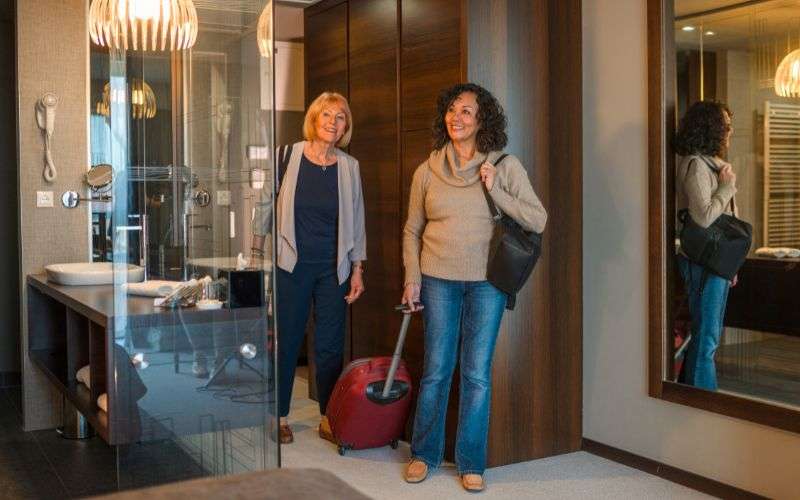
Imagine yourself arriving for a stay.
Where would you put your suitcase? Is there somewhere to hang your coat? Can you comfortably prepare breakfast? Is there enough fridge space for a family staying for several days? Is there somewhere convenient to charge your phone next to the bed?
These practical considerations might never be mentioned in a property description, but they contribute enormously to the guest experience.
And a better guest experience can mean better reviews, repeat bookings and recommendations.
5. Give the property some personality
Minimal doesn’t have to mean bland.
With guests often comparing numerous properties before making a booking, having something distinctive about your short-term let can help it stand out.
That could be the artwork, furniture, colour palette, lighting or smaller decorative details.
The aim isn’t to fill the property with unusual objects simply for the sake of being different. Instead, look for opportunities to create a coherent style and give guests something memorable.
You want someone scrolling through listings to be able to picture themselves staying there.
6. Spend money where guests will notice the difference
You don’t need to completely redesign a property to improve it.
Before spending money on decorative items, consider the things that directly affect the guest’s stay.
A comfortable mattress, good-quality bedding, decent pillows, effective lighting, reliable Wi-Fi, sufficient kitchen equipment and appropriate storage can all be more valuable than another decorative accessory.
Think about the type of guests you’re trying to attract too. A property aimed at families will have different requirements from an apartment designed primarily for business travellers or couples taking weekend breaks.
Your investment should reflect the needs of your target guest.
7. Consistency matters
Finally, don’t look at each room in isolation.
A great short-term let should feel consistent from the moment somebody walks through the door.
That doesn’t mean every room needs to be identical. It means maintaining the same standards throughout the property.
If the kitchen feels premium but the bedroom feels neglected, guests will notice. If the photographs promise a pristine property but the bathroom isn’t immaculate when they arrive, they’ll notice that too.
The little things add up.
Preparing a short-term let?
Getting a property ready for short-term letting involves much more than putting it online and waiting for bookings.
From preparing and presenting the property to managing guests, cleaning, maintenance and the day-to-day operation of the let, there are a lot of moving parts to get right.
At mySTAYINN, we help property owners take care of those details, creating well-managed short-term lets that provide a great experience for guests without the owner having to manage everything themselves.
If you’re considering turning a property into a short-term let, or you already have one and want to improve how it’s performing, get in touch with the mySTAYINN team to find out how we can help.


